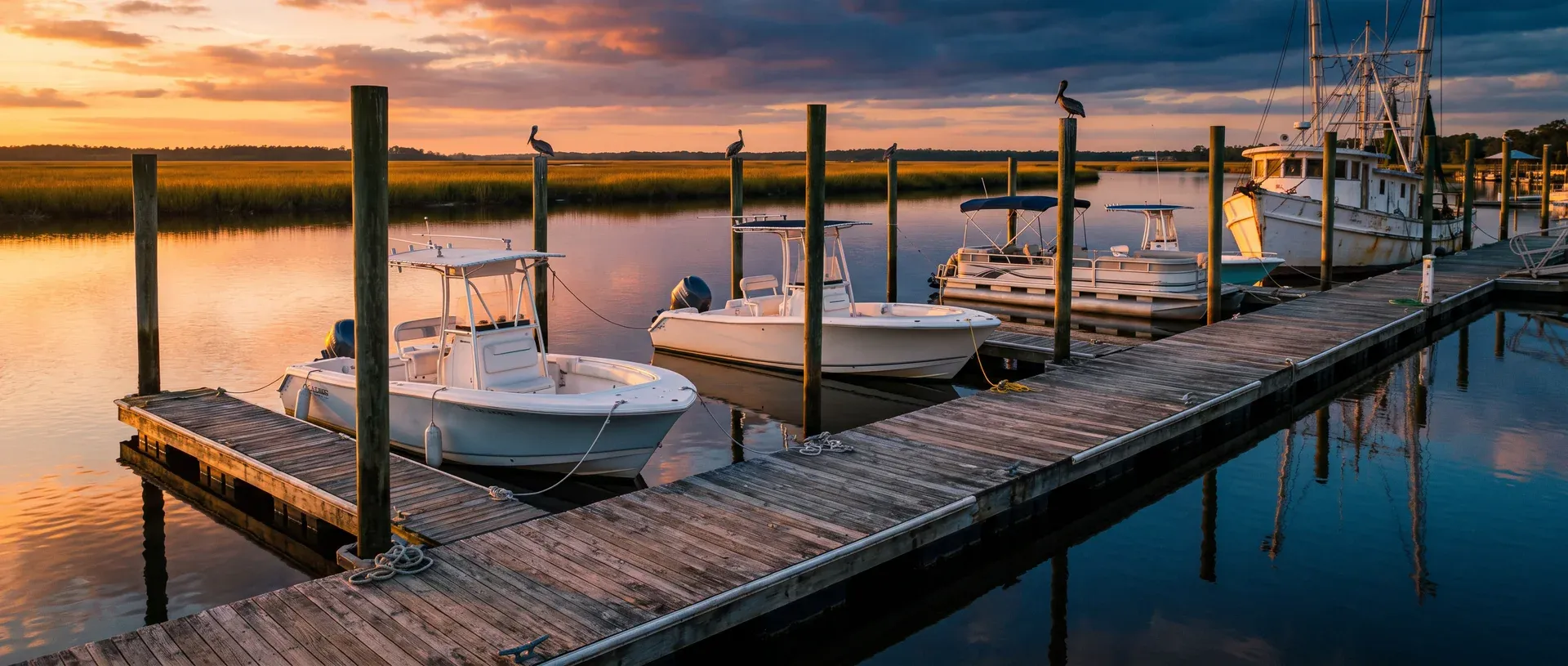
A marina is a neighborhood with a shared front yard. The rules are mostly common sense, but a few of them are specific to living on a floating dock.
At Deadman Bay Marina, our docks are floating, which means they rise and fall with the tide and move a little underfoot. That changes how you tie up, how you walk, and how much slack your neighbor needs. Whether you are staying for a night or a season, a little courtesy goes a long way.
Lines, fenders and your neighbor’s gelcoat
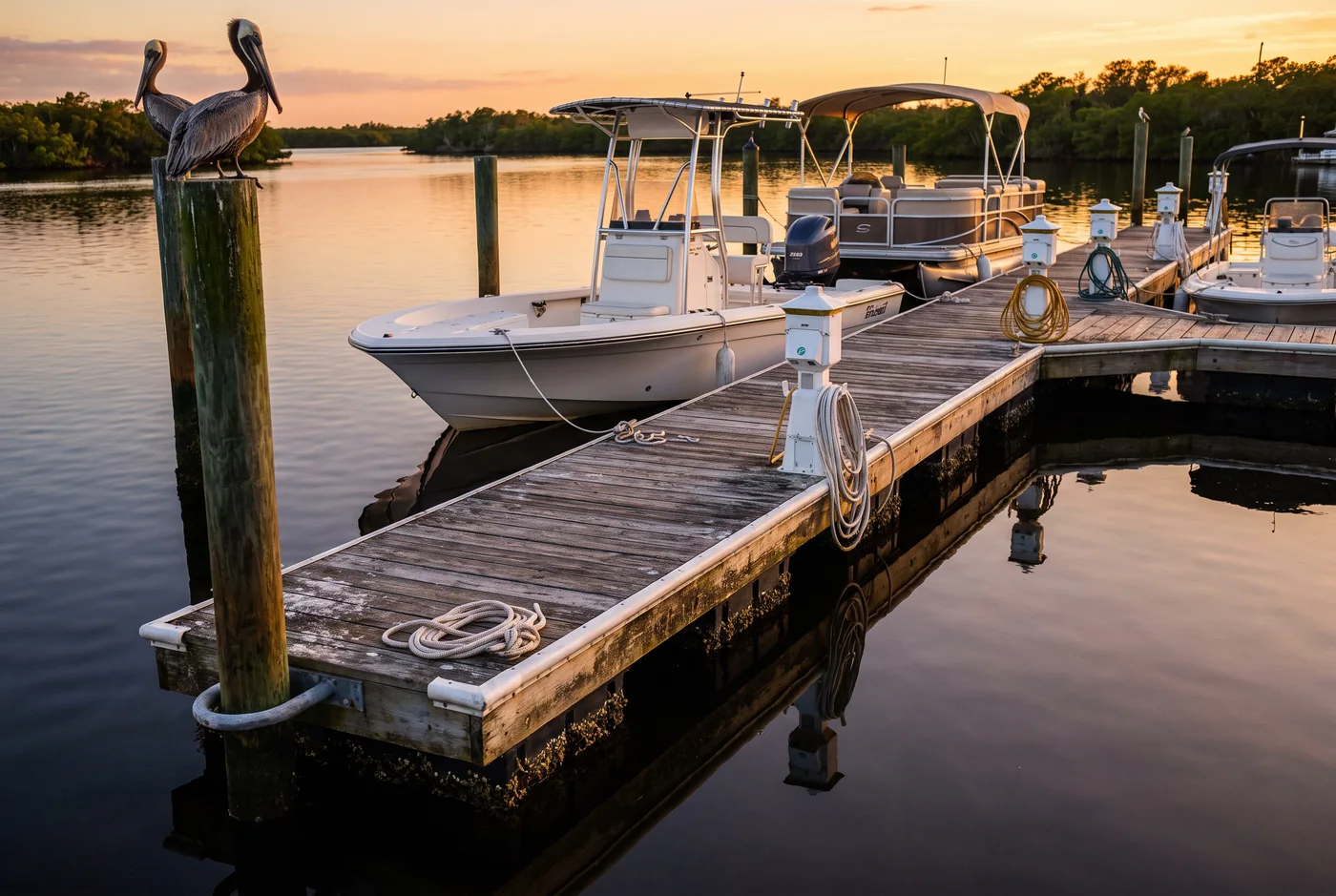
Tie your boat so it can move with the dock, not against it. Use spring lines to keep the boat from surging forward and back, and set fenders at the height of the dock rather than the height of the water at the moment you arrived. The tide will change while you are asleep.
- Use your own cleats. Do not tie a line to a neighbor’s boat or run a line across their slip.
- Check your lines after the tide turns. A line that was snug at high water can hang loose at low, and a line that was loose can come tight and chafe.
- Keep the finger pier clear. Coolers, buckets, rods and bicycles left on the dock make it hard for everyone to board.
Noise and wake
Sound carries across water. Idle through the marina and past the docks, especially early in the morning and after dark. If you are running a generator, keep it to reasonable hours and point the exhaust away from the boat next door. Music on the deck is part of the fun; music at a volume that reaches three slips down is not.
When you leave, give the dock a wide berth and come off plane before you reach the moored boats. A wake that rocks a boat against its lines can damage a hull or knock someone off a ladder. The same courtesy applies to kayakers and paddleboarders in the river.
Arriving has its own rhythm. Call ahead so we know you are coming, have fenders and lines ready before you enter the basin, and approach at idle speed. If someone is already in the fairway, wait rather than squeezing past. A slow, quiet arrival makes a better first impression than a perfect three-point turn.
Fish cleaning, trash and pets
Clean fish at the cleaning station, not on the dock or at the rail of the bar. Scraps go in the bins, not in the water; feeding the pelicans and gulls seems harmless until they learn to mob every boat that comes in. Bag your trash, including bait wrappers, line clippings and empty cans, and use the bins provided.
Pets are welcome on a leash. Clean up after them, keep them off other boats, and do not leave them aboard alone in the heat. A dog that barks at every passing skiff makes the whole dock tense.
Help where you can
Catch a line for a boat coming in, especially if the wind is up. Share the ramp and the dock space; move your boat clear once you are done. If you see a line parted, a bilge running or a boat taking on water, tell the office. We would rather check ten false alarms than miss a real one.
That spirit is what makes a transient dock feel like a neighborhood. Visitors remember the person who grabbed a bow line in a crosswind, not the one who hurried past. Return the favor when you are the one coming in.
If you are not sure where to tie up, where to park the trailer or when the kitchen stops serving, ask at the dock office or check our FAQ. The answer is usually simple, and it keeps the dock a good place to come back to.