
Winter on the Big Bend is mild enough that most boats keep fishing, which is exactly why winter maintenance matters. A boat that sits for three months in cool, damp air comes back with problems that a boat used every weekend never develops. Here is the routine we recommend, whether your boat lives on a trailer, a lift or in a slip.
Fuel and engine
Modern fuel does not like to sit. If the boat will be idle for more than a few weeks, top the tank before you park it, which leaves less room for condensation, and treat the fuel with a stabilizer according to the label. Run the engine long enough afterwards for the treated fuel to reach the injectors.
Change the oil and the lower unit gear lube before storage rather than after. Old oil holds moisture and acids, and a winter sitting in the crankcase does the engine no favours. Check the spark plugs, the fuel filter and the water separator while you are in there. If you are not comfortable doing the work yourself, book it with a mechanic before the spring rush, when everyone in town wants their boat back at the same time.
Batteries and electrical
Cold nights are hard on batteries, and a battery that was marginal in October will be dead by January. Take them home if you can, or put them on a maintenance charger where the boat is stored. Clean the terminals, check the electrolyte if the battery allows it, and look over the wiring for corrosion. Salt air works on connections all year, and a loose ground is the cause of more no-start mornings than any other single thing.
Hull, lower unit and zincs
Wash the hull, the trailer and the engine with fresh water after every trip, and pay attention to the places you cannot see: under the trailer bunks, behind the transducer, inside the engine cowling. Salt left in those spots keeps working all winter.
- Zincs: inspect the anodes on the engine and the trim tabs. If they are more than half gone, replace them before spring.
- Propeller: pull it, check the hub and grease the shaft.
- Through-hulls: open and close each one, and check the hoses for cracks.
- Trailer: repack the wheel bearings, check the tires for sidewall cracks, and test the lights.
- Cushions and canvas: take them inside. Mildew is easier to prevent than to remove.
Storage and covers
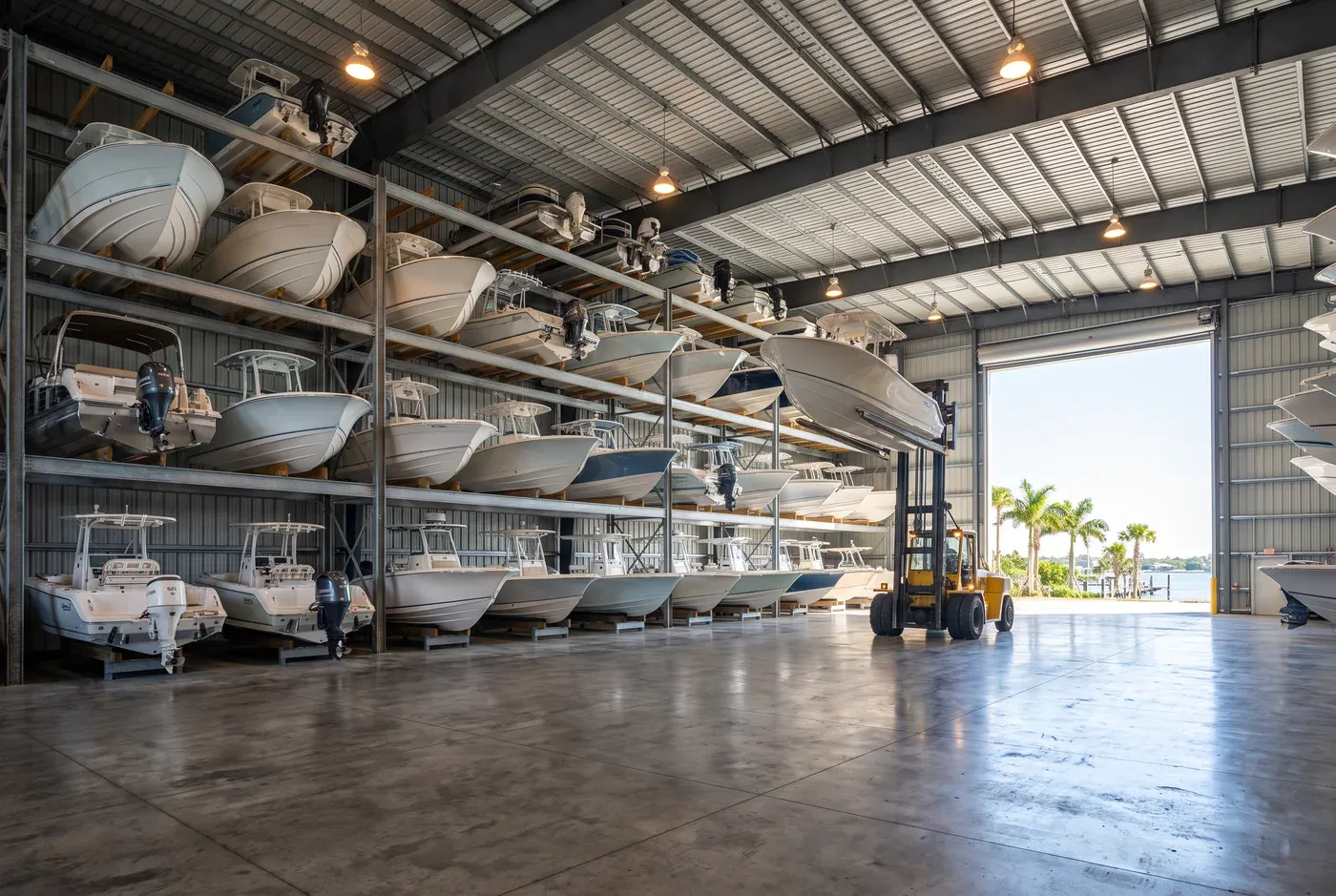
Where the boat sits matters as much as what you do to it. A covered dry stack keeps sun and rain off the hull and the upholstery, and ours is enclosed on three sides and oriented north–south, which keeps the worst of the weather off the boats. If your boat stays outside, use a fitted cover that breathes. A tarp that traps moisture under it will do more harm than good.
In a slip, double up the lines before a front comes through, check the fenders and make sure the bilge pump is working. A boat that is tied loosely in a north wind will find the dock eventually.
The short version
- Top off and stabilise the fuel; service the engine and lower unit.
- Pull or charge the batteries and check the wiring.
- Fresh-water wash, new zincs, greased propeller and trailer bearings.
- Cover it properly, or keep it in the covered dry stack.
- Check the lines and the bilge pump if it stays in a slip.
None of this takes a weekend. An afternoon in November saves a week in April, and it means the first warm day of spring is a fishing day rather than a repair day. If you need parts, oil or a new anode, the ship store carries the basics and can point you to a local mechanic for the rest.