Most boat-buying mistakes are made before anyone looks at a listing. They are made in the gap between the boat you picture yourself owning and the water you actually fish. On the Big Bend, three questions cover most of that gap: length, layout and liability.
Length: what your water and your storage allow
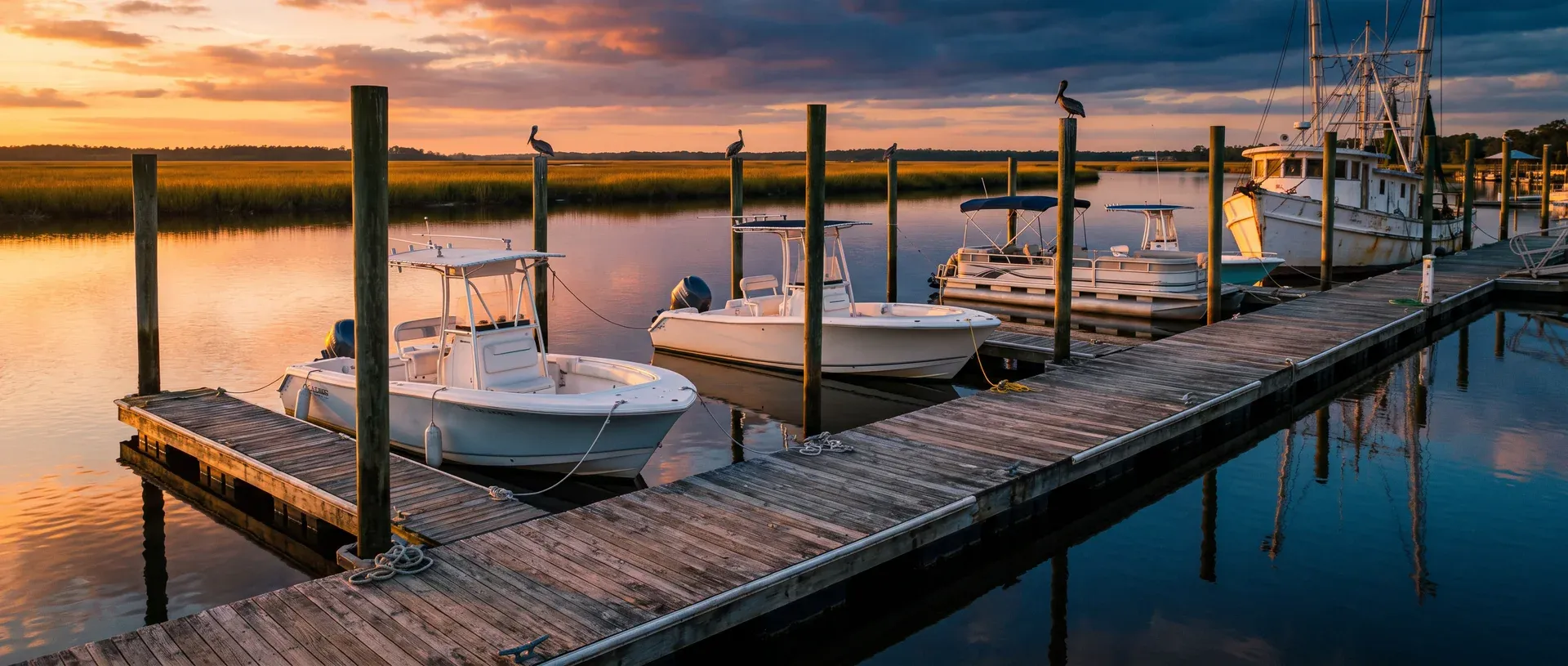
The Big Bend is shallow. The flats out of Deadman’s Bay and along the Taylor County coast run for miles in two to eight feet of water, and even our river channel carries about 3.5 feet at controlling depth, with 5.5 feet mid-channel. A deep-V offshore boat that draws three feet is a fine machine in the Gulf swell and a liability on a falling tide over the grass.
Length also decides where the boat lives. Measure your driveway, your garage and your tow vehicle’s rating before you fall in love with a hull. If you plan to keep it here, our covered dry stack takes boats up to 40 ft, and trailer storage is priced by axle count. A boat that is awkward to store is a boat that stays on the trailer.
Layout: how you actually use the boat
Walk the deck and imagine your real day, not the brochure day. If you fish the flats, you want casting space forward, a live well that works, rod storage out of the way and a hull you can pole or drift quietly. If the family comes along, you want seating, shade and a swim ladder. Very few boats do both well, and the ones that try usually compromise on one.
- Fishing first: open foredeck, live wells, rod lockers, low gunwales for landing fish.
- Family first: seating with backrests, shade, a boarding ladder, room for a cooler and a tow tube.
- Mixed use: a bay boat or a deck boat, accepting that it will be good at both and great at neither.
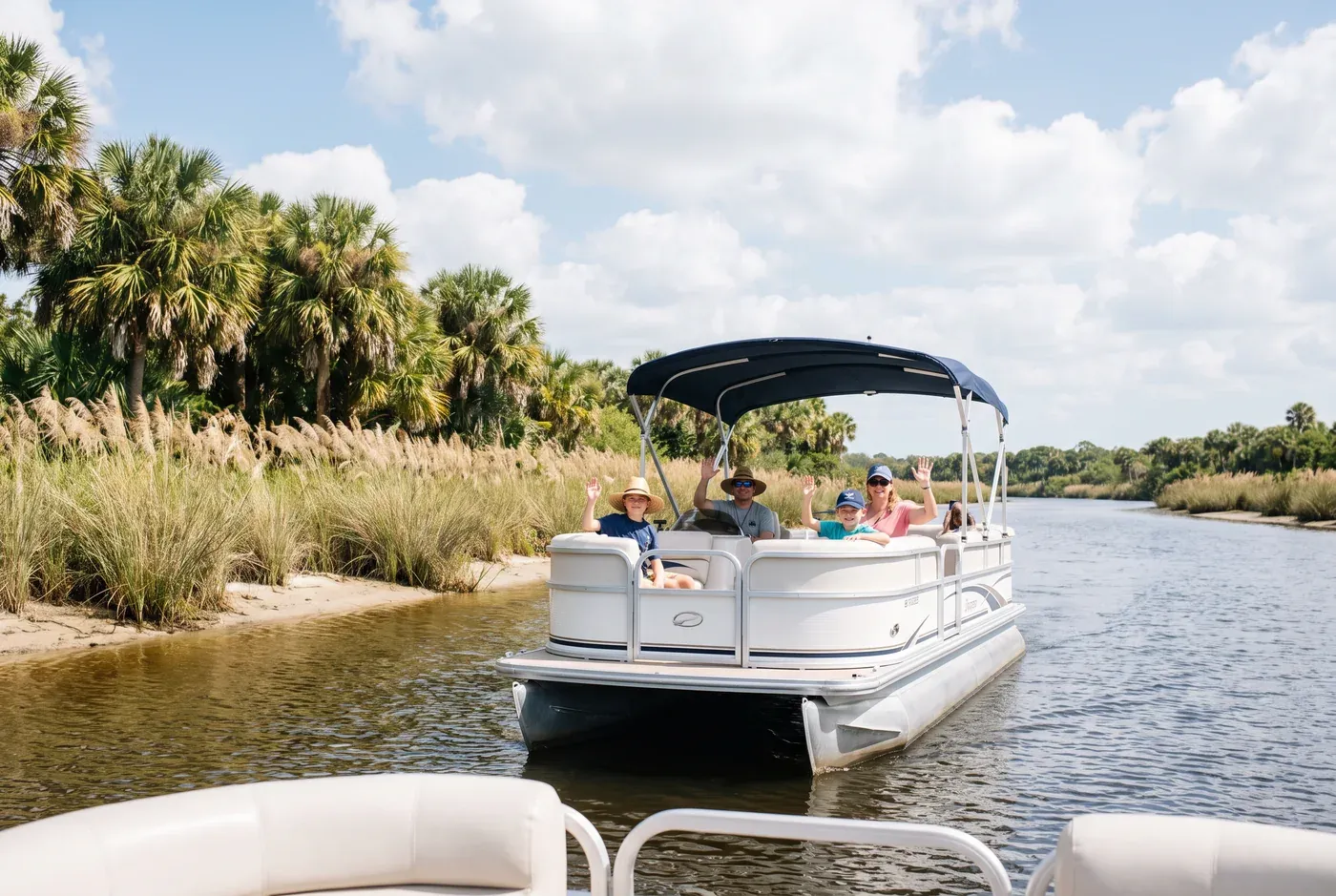
Our rental fleet is the cheapest way to test the difference. A day in the 24 ft Carolina Skiff tells you more about how you fish than an hour at a boat show, and the 20 ft pontoon and 23 ft tritoon show you what a cruising day feels like. Rent both on separate trips and the decision usually makes itself.
Liability: the paperwork and the upkeep
The third L is the one people skip. A boat is a registered vehicle, an insured asset and a maintenance schedule, and all three cost money every year whether or not you use it.
- Insurance: talk to your agent before you buy, not after. Hull value, liability limits and where the boat is stored all affect the quote.
- Registration and title: Florida requires registration for motorised vessels. Get the paperwork straight at the sale.
- Maintenance: engine service, trailer bearings, batteries, zincs and covers. Salt water is hard on everything it touches.
- Storage: a slip, a dry stack or a trailer spot, plus the fuel and time to get to the ramp.
If you are new to boating, take the free Florida boater safety course at boatus.org/florida before your first run. It covers the rules of the road, markers and safety gear, and it is required for our renters aged 21 to 28. It is a good use of an evening even if you own the boat outright.
Try before you buy
The cheapest boat is the one you did not buy by mistake. Spend a season renting or chartering, fish the water you plan to fish, and pay attention to what you wish the boat did differently. When you are ready to buy, we can talk through storage options and what fits our stack. Until then, the rental fleet and the local captains are both good places to start, and our boat storage page lays out what it costs to keep a boat here.