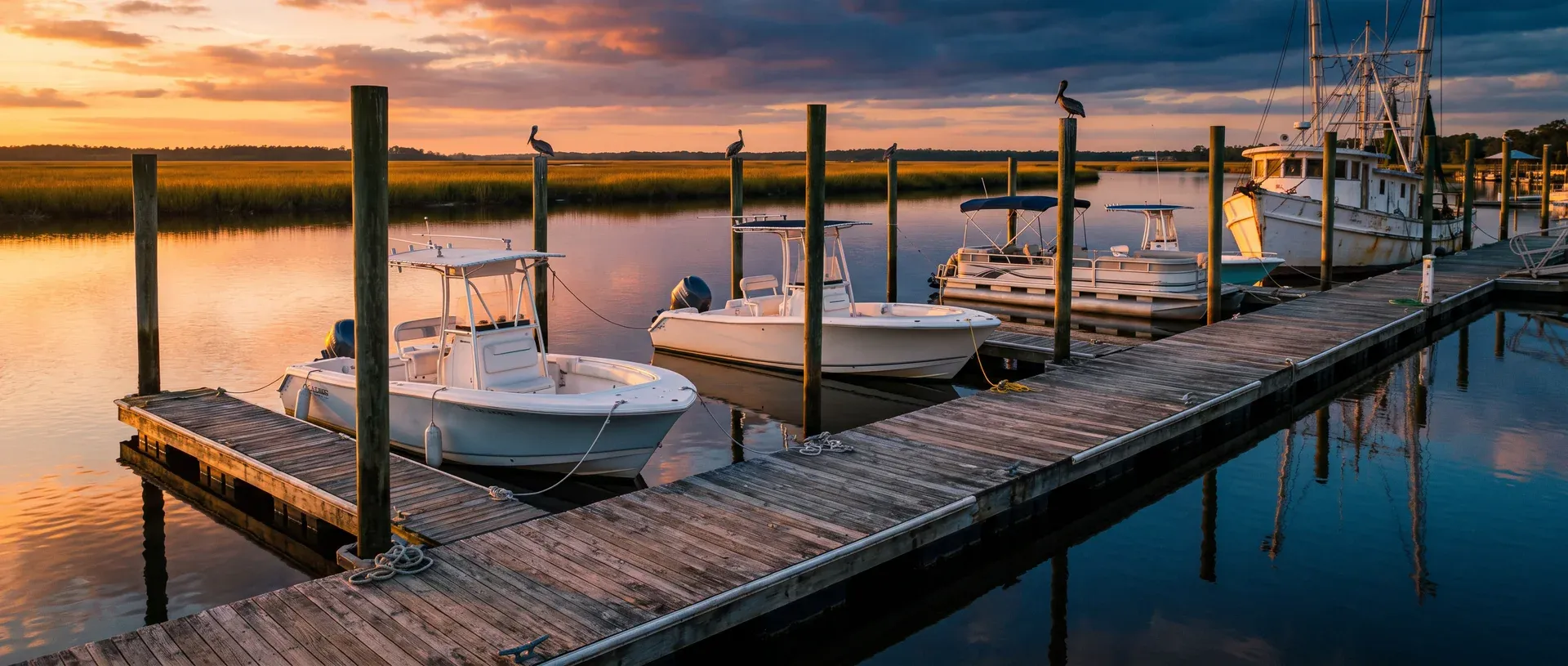
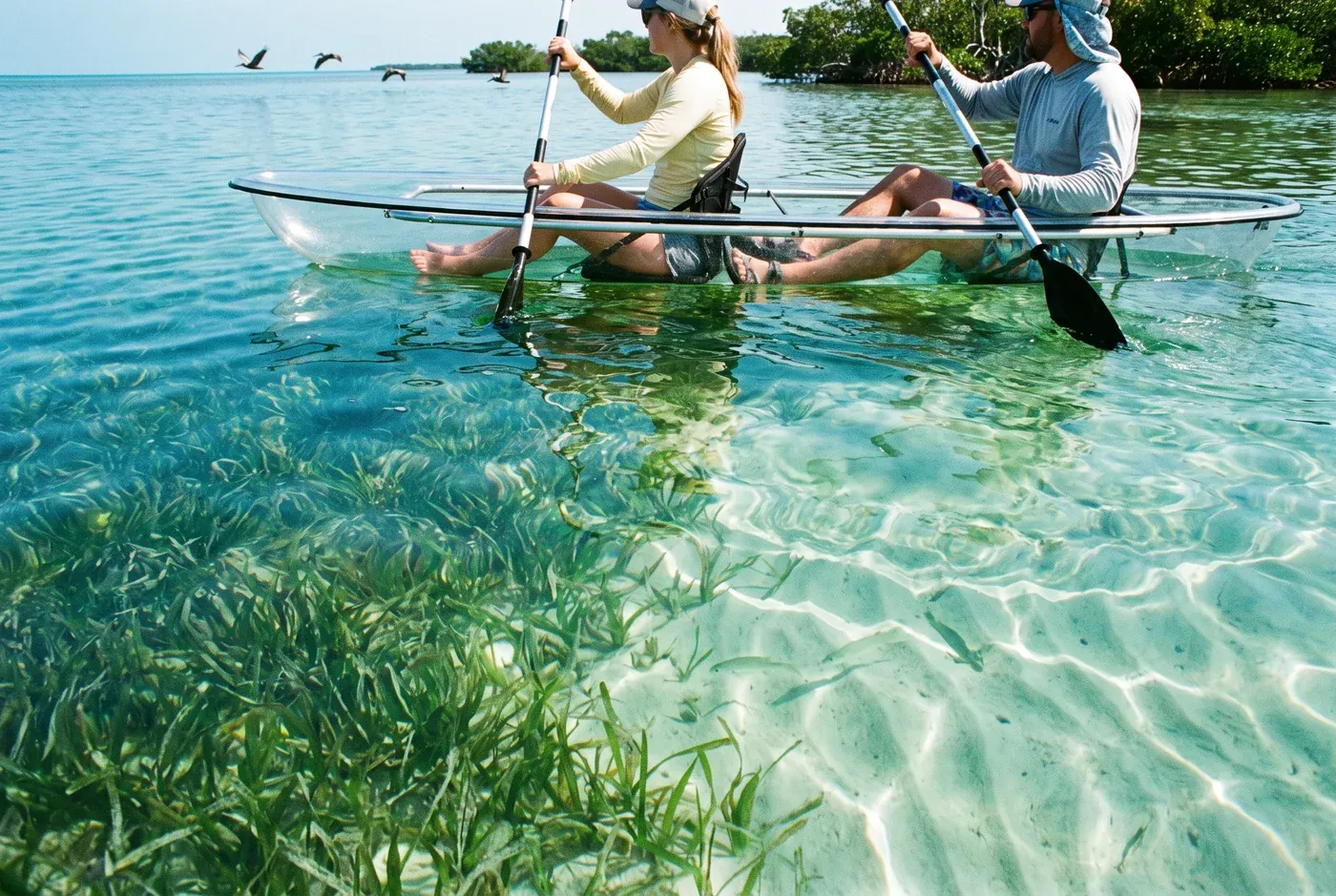
A kayak sits a few inches above the water, which is the best thing about paddling and the reason safety deserves a little thought before you launch.
The Steinhatchee is a calm river, but calm is not the same as empty. There are boats, docks, oyster bars, changing tides and summer storms. Most kayaking problems are small and preventable: a hat lost to the wind, a paddler tired by current, a phone that goes overboard. A few habits keep the day enjoyable.
Wear it, do not stow it
Florida requires a life jacket for each person aboard, and children under six must wear one. Put yours on at the launch, not in the bottom of the hull. A jacket that is the right size and snug enough not to ride up is comfortable for a full day; one that is too big is worse than useless in the water.
A light and a sound device are also required on board, and they are worth having even in daylight. Our clear kayaks come with safety gear included, so you can spend your attention on the river instead of the checklist.
Check the wind, tide and sky
On the river, the tide and the wind decide how hard your return trip will be. Paddle upriver or into the wind first, then let the current or the breeze bring you home. An outgoing tide can make the mouth of the river feel like a different place than it did on the way out.
Summer thunderstorms build quickly on the Big Bend. Check the forecast before you launch, watch the western sky, and come in early if the clouds start to tower. Lightning on open water is not a risk worth managing. Our weather and tides page has the links you need.
If the wind is already blowing when you arrive, change the plan. A paddle up one of the protected creeks is a better day than a fight across the bay, and the creeks are where the birds and the quiet water are anyway.
Sun, water and visibility
- Cover up: a hat, sunglasses and sunscreen, plus a long-sleeve shirt if you burn easily. The sun reflects off the water twice.
- Bring more water than you think: a bottle per person for a short paddle, more for a half day.
- Be seen: bright colors, a flag on the stern, and a light if you are out near dusk. Powerboats do not always look low.
- Stay close to shore on your first trips, and tell someone where you are going and when you expect to be back.
If you go over
Stay with the boat. A kayak floats, and it is much easier for a rescuer to see than a swimmer. If you are in current, point your feet downstream and work toward the bank rather than trying to stand in moving water. Practice a wet exit and a re-entry in shallow water before you paddle anywhere deep, and dress for the water temperature rather than the air.
Keep your gear tethered. A paddle leash, a clip for the dry bag and a strap for the cooler mean a capsize costs you a few minutes instead of a phone and a set of keys.
Paddle with a partner when you can, especially on the bay. Two boats make a rescue simple and a long day shorter. If you are unsure about conditions, call us at (352) 578-1900 or stop by the dock office; we would rather talk you into a calmer route than send you out into a squall.