The Steinhatchee River is one of the easiest places in Florida to learn to paddle, and one of the most rewarding places to keep doing it. The water is shallow, the current is gentle and the river opens into a bay full of grass flats. This is a paddler’s guide to the water, the tides and the gear.
Routes from the marina
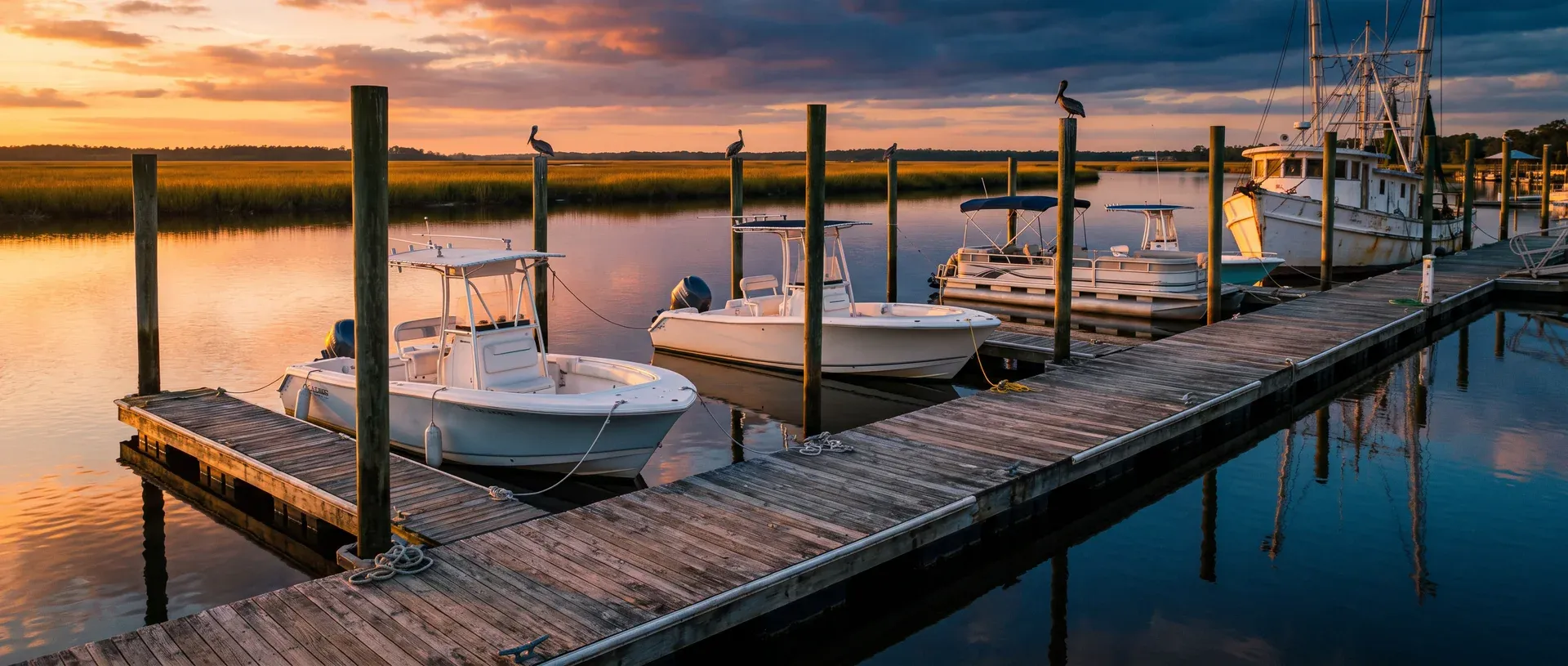
Our dock is about a mile and a half upstream of Deadman’s Bay, which makes it a natural starting point for three kinds of paddle.
- Upstream: the river narrows, the current picks up slightly and the banks are lined with oaks and docks. It is the quietest paddle, and the best one for a first outing.
- Downstream to the bay: a steady paddle out through the river mouth and into Deadman’s Bay, where the water opens up and the flats begin.
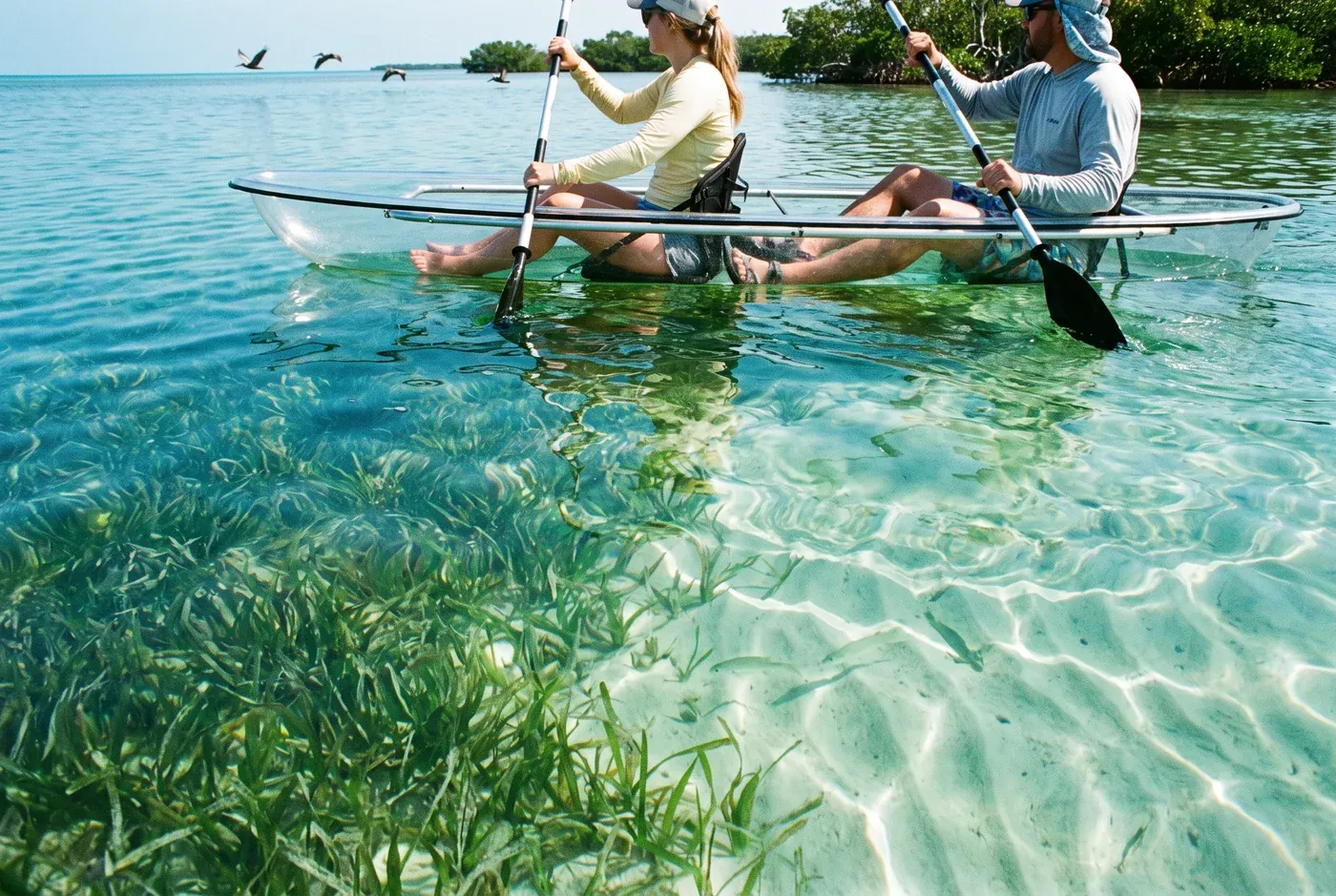
- The flats: once you are in the bay, the grass shallows stretch along the Big Bend coast. Pick a line, drift, and watch the bottom through the hull.
Give yourself more time than you think you need for the return trip. Paddling out with the current is easy; paddling back against it is the part people underestimate.
The tide moves water in and out of the river twice a day, and it is the single most useful thing to plan around. A falling tide will carry you downstream toward the bay; a rising tide will help you back. If you time it well, you can do most of the work with the water instead of against it.
Low water also exposes more of the flats and the shoreline, which is good for seeing wildlife and bad for getting stuck in mud. Plan to be back at the dock before the water drops too far, especially if you are paddling the shallows. Check the tide before you launch; our weather and tides page has the daily picture.
Gear and safety
Our clear kayaks are $50 a day, one paddler each, and safety gear is included. Whatever you paddle, the basics are the same.
- Life jacket: one per paddler. Children under six must wear one, and everyone should.
- Light and sound device: required on the water, and genuinely useful if the light goes.
- Water and sun protection: the reflection off the water doubles the exposure.
- A dry bag and a leash: for your phone, keys and paddle.
- A float plan: tell someone where you are going and when you expect to be back.
Non-motorised kayaks do not need registration in Florida, but the safety rules still apply. If you are new to paddling, stay on the river for the first trip and build up to the bay.
Fishing from a kayak
Kayak fishing is a quiet, simple way to chase redfish and trout on the flats. You do not need much: one rod, a small tackle box, a pair of pliers and a landing net. Live bait from the ship store works well, and a soft plastic on a light jig head is easy to fish from a seated position.
Keep your kit small and tethered. Anything you drop over the side is gone, and a kayak fills up quickly with gear you do not use. Drift the edges of the grass, cast toward the shallows and stay quiet.
Wildlife, and how to watch it
Manatees, dolphins, stingrays, pelicans and ospreys all use this river. From a kayak you will see more of them than you would from a boat, and you will get closer than you should. Give them room, keep your paddle still when they pass and never chase. A manatee that surfaces beside you is worth more than a photograph of one you ran down.
Book a boat through our kayak rental page, and read the fishing guide if you want to combine paddling with a rod. The river rewards patience, and a kayak is the best way to practise it.