Two tubes or three? It sounds like a detail, but the third tube changes how a boat sits, how it handles a chop and how many people you can comfortably put on board. If you are choosing between our pontoon and tritoon rentals, here is the practical difference.
What the third tube actually does
A pontoon boat rides on two aluminium tubes, one on each side. A tritoon adds a third tube down the centre. That centre tube carries more of the weight, so the boat floats higher, planes more easily and stays flatter in a turn. In simple terms, the tritoon feels more like a boat and less like a raft.
Three tubes also mean more buoyancy and more room for people and gear. On open water, the extra tube helps the boat bridge short chop instead of slapping through it, which is noticeable on the bay when the afternoon wind picks up. The trade-off is cost: a tritoon is the more expensive boat to rent because there is more of it to build, power and maintain.
Matching the boat to your day
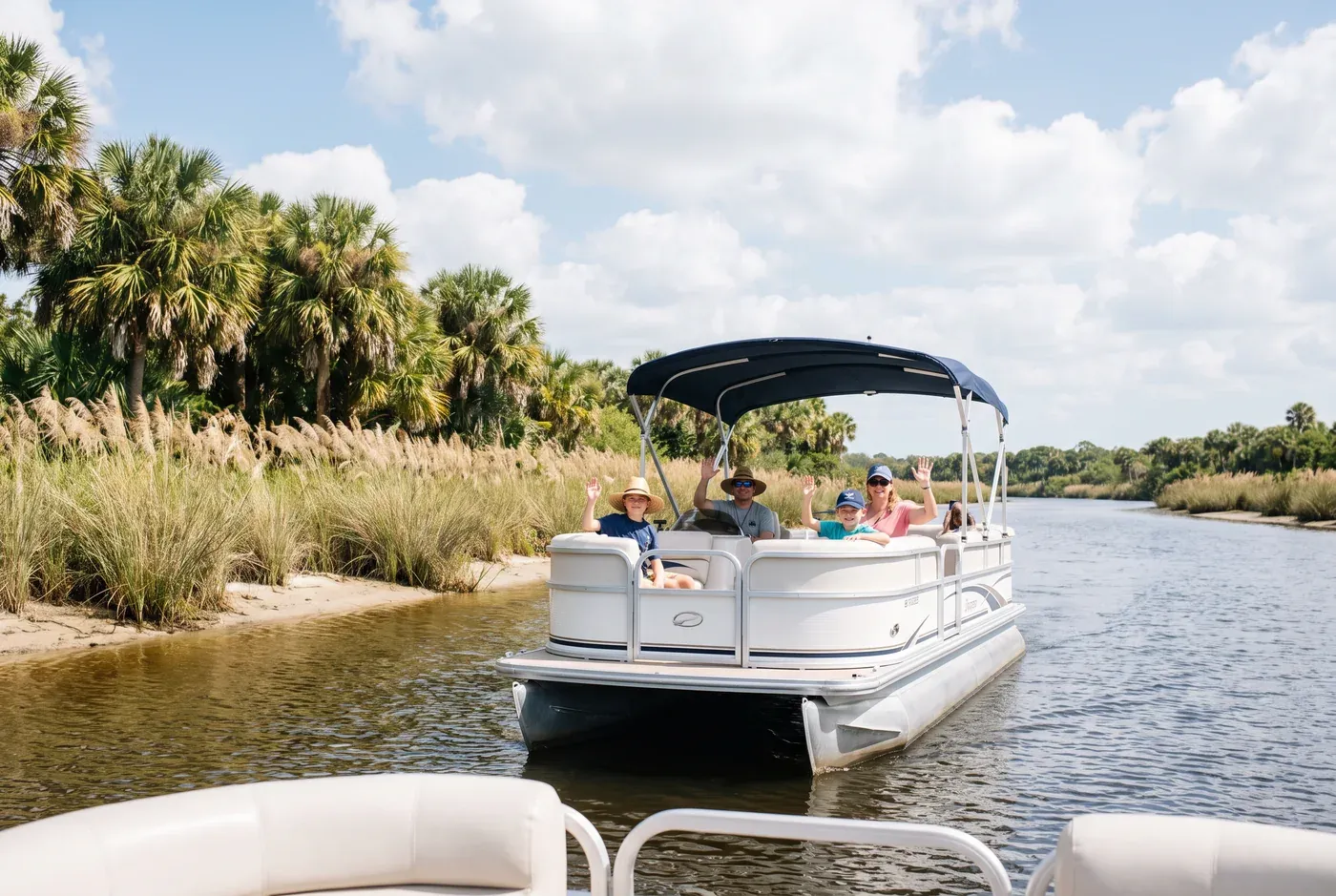
- 20 ft Bennington Pontoon, $309 per day. Seats up to six, powered by a Yamaha 70, with a Bluetooth radio and a swim ladder. It is the easy choice for a family cruise up the river, a slow picnic on the water or a small scalloping group working the shallows.
- 23 ft Bennington Tritoon, $359 per day. Seats up to ten, powered by a Yamaha 115 SHO, with Bluetooth and a swim ladder. The extra capacity and power make it the better pick for a bigger group, a longer run or a day that might take you across open water.
- 24 ft Carolina Skiff, $259 per day. Seats up to ten and built around fishing, with live wells, rod storage, two bench coolers and a swim ladder. If the plan is to cast rather than cruise, this is the boat.
All three are booked the same way: a $100 deposit per boat per day, operators 21 and over, and a free Florida Boater Safety Certificate for anyone aged 21 to 28. Boats go back by 5 p.m.
Draft, wind and the Big Bend
Both pontoons draw very little water, which is why they work so well here. The bay scallop grounds around Steinhatchee sit in seagrass in roughly two to eight feet of water, and the flats beyond the river can be shallower still. A pontoon lets you ease across that ground without worrying about a deep keel, and the swim ladder makes it easy to slide in and out while you hunt for scallops.
Wind is the other factor. A pontoon has a lot of side area above the waterline, so a crosswind pushes it around at low speed and makes docking a two-handed job. The tritoon tracks better and holds a line more firmly, which helps on a breezy day. Either way, check the forecast and tide before you leave, and give yourself room to come alongside the dock slowly. Our weather and tides page is the place to start.
Which one to book
If your group is small, your route stays on the river and the day is about swimming, lunch and a slow ride, the pontoon is plenty of boat. If you are bringing eight or ten people, crossing the bay, or want the extra stability when the wind builds, spend the extra and take the tritoon.
Scallop season is the busiest stretch of the year for both boats, so book early through our boat rentals page and read the scalloping guide before you go. Knowing which boat fits your day is half the planning done.