Docking is the part of boating everyone watches. It is also the part that goes wrong most often, usually because someone arrived too fast, too close or without a plan. A few habits turn a stressful arrival into a routine one.
Slow is the whole trick
Approach the dock at idle, or just above it, and give yourself time to correct. Momentum is the enemy on a boat: you cannot brake the way you can in a car, and a burst of throttle to fix a mistake usually makes it worse. Come in slowly, use short bursts of forward and reverse, and let the boat settle before you commit.
Wind and current decide your angle. On the Steinhatchee River there is usually some current running, and the smart approach is to come in against it rather than with it, so the water helps you stop. If the wind is pushing you toward the dock, approach at a steeper angle and let it carry you in. If the wind is pushing you away, come in shallower and be ready to add power.
Set up before you arrive
- Fenders: tie them at rub rail height on the side you will land, with enough of them to protect the hull.
- Lines: have a bow line, a stern line and at least one spring line ready and coiled, not tangled in a locker.
- Crew briefing: tell each person which line they are handling and where they should stand. Nobody jumps for the dock.
- Boat hook: keep one within reach for picking up a line or fending off gently.
A thirty-second briefing before you enter the marina basin prevents most of the shouting that docking is famous for.
Spring lines and floating docks
Two lines hold a boat to a dock. A spring line keeps it from surging forward and back, and it is the line most people forget. Run it from a bow cleat back to a dock cleat, or from a stern cleat forward, at a shallow angle. With a spring line set, the boat stays put when the tide or a passing boat sends a wake through the slip.
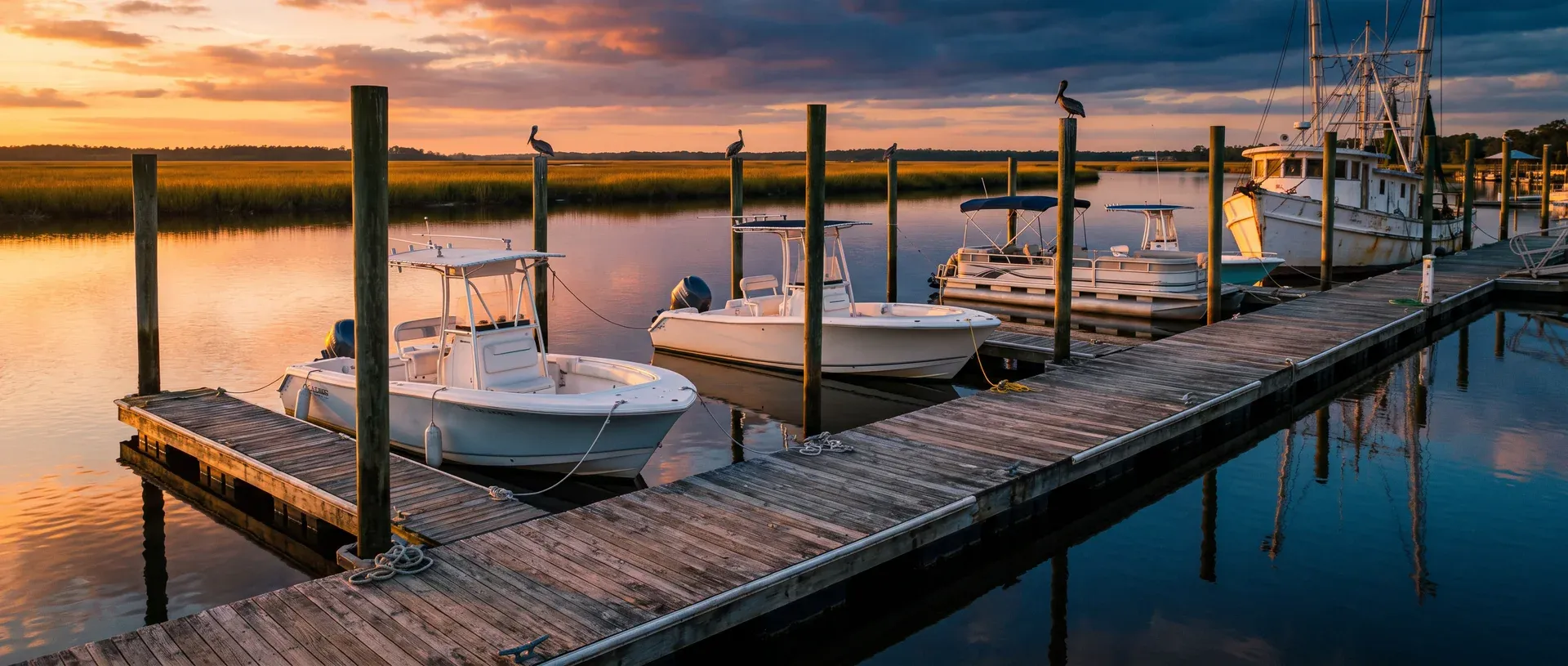
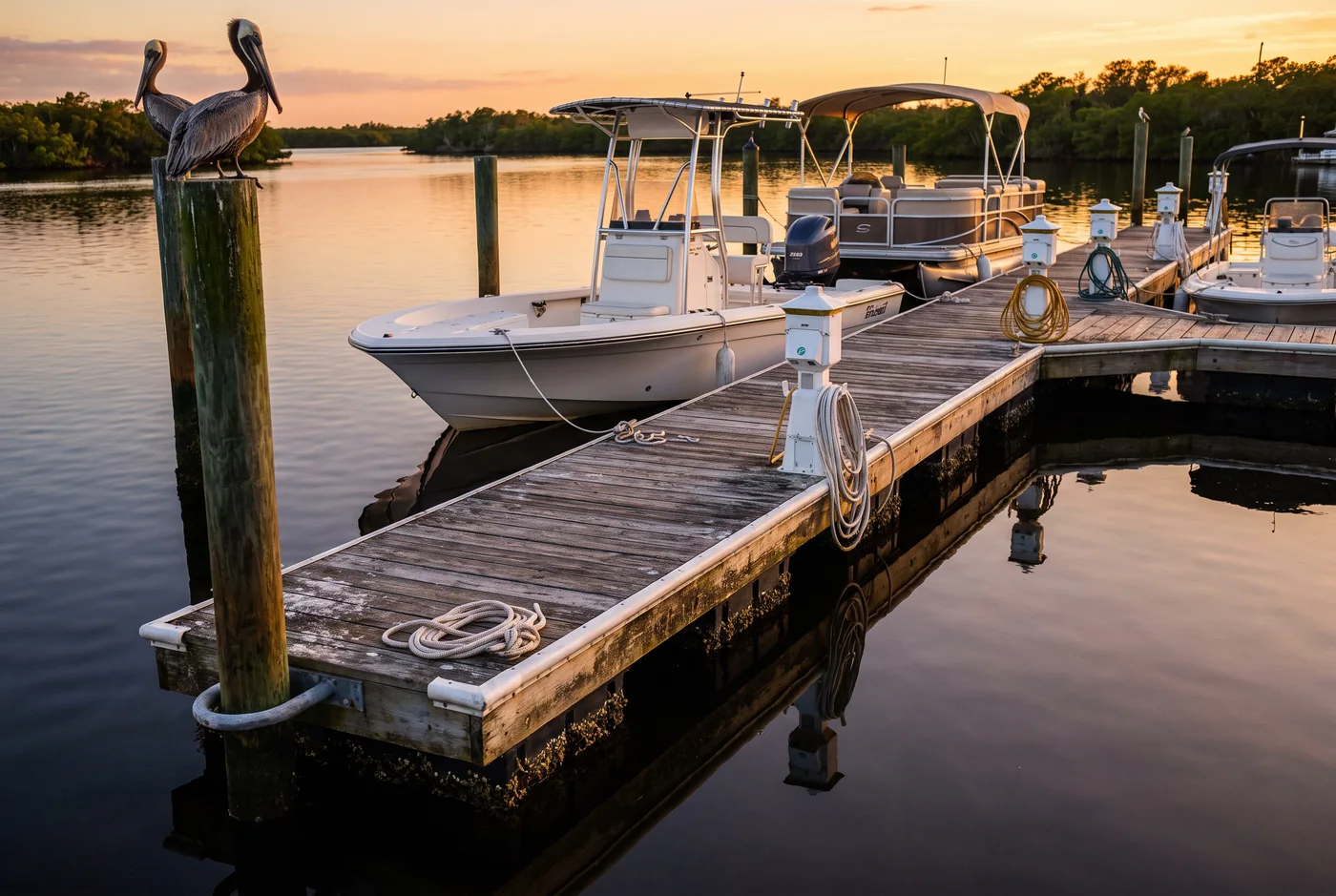
Our floating docks rise and fall with the tide, which makes life easier. The cleat height stays roughly the same, so your lines do not need adjusting every few hours, and stepping on and off is simpler. Tie off with a cleat hitch, leave a little slack for movement, and check the lines before you leave the boat.
Practice, and be a good neighbour
Docking is a skill, and skills improve with repetition. Practise on a calm weekday morning when the marina is quiet, and try the same slip several times rather than moving to a new one each attempt. If you are renting, ask the staff to watch your first arrival and give you a pointer.
Come off plane well before the marina and idle through the no-wake water. Slow down for docks, kayaks and anchored boats, and offer to take a line for someone arriving behind you. A marina works better when everyone helps.
If you need a slip for the night, our transient slips are $0.75 per foot per night up to 32 ft and $2.00 per foot over 32 ft, with scallop season at $2.00 per foot for all lengths, and power is available at 30 or 50 amp. Read the dockage page for details, check the tide on weather and tides, and look at the FAQ if you have not stayed with us before.